
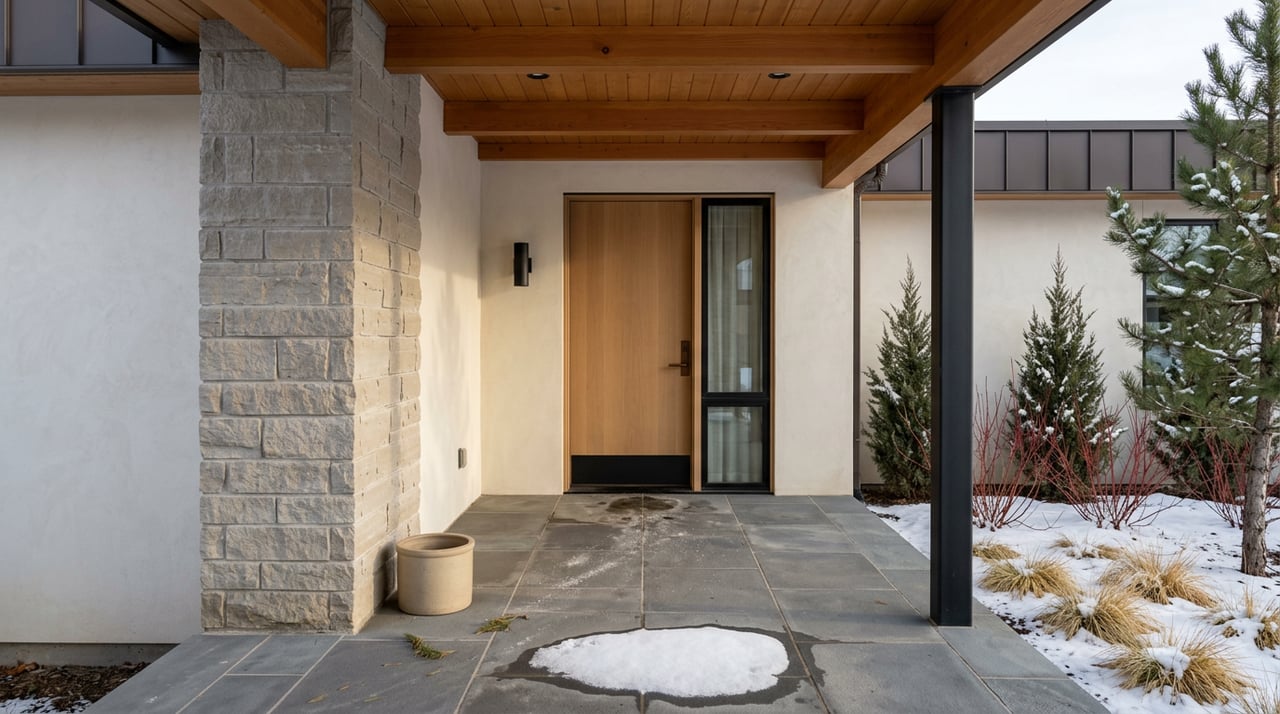
The Big Sky buyer who wired earnest money in January 2026 is underwriting a different asset than the one their agent pitched last summer. Montana's new residential tax structure took effect on 2026 bills, and it rewrites the pro forma on any home that is not a full-time residence.
The math is not subtle. The friction that used to live in a paragraph on page nine of the CC&Rs now shows up on the tax bill.
Under House Bill 231 and Senate Bill 542, residences that qualify as a primary home (occupied at least 7 months a year) or a qualifying long-term rental (leased in 28-day-or-longer terms for at least 7 months a year) are taxed at a new tiered homestead rate, while second homes, vacation properties, and short-term rentals are taxed at a flat 1.9% of full assessed value. The Montana Department of Revenue's initial projections estimated that the average owner-occupied home would see taxes decrease roughly 18% and long-term rentals roughly 22% relative to 2024 bills, while the average home that does not qualify for the homestead exemption would likely rise about 68%.
For Big Sky, that percentage is not an abstraction. Parsons Behle's tax practice group modeled the swing in dollar terms: nonresidents, second homes and short-term rentals valued at over $1.5 million will likely see an increase of approximately $8,250 per year, assuming no change in property value or mill levies.
Layer that against Big Sky's price band. Big Sky's median over the trailing 12 months sits around $1,185,000, and Gallatin Gateway around $1,293,000 — and luxury inventory in Big Sky typically starts around $2M and extends past $10M for premium ski-in/ski-out or club properties. The tax reset lands directly on the segment most Big Sky second-home buyers are shopping.
Here is the claim: in Big Sky, the property-tax question and the short-term-rental question are no longer separate diligence items. They are the same decision, and the deed's subdivision line is what settles both.
If a property can legally operate as a long-term rental or the buyer plans to live in it seven months a year, it drops into homestead pricing. If it cannot, and the buyer needs rental income to offset the flat 1.9% rate, the CC&Rs of that specific subdivision decide whether the offset even exists.
That is the underwriting question. Not "does Big Sky allow short-term rentals" — the answer to that is broadly yes — but "does this deed allow the use that makes the tax math work."
Big Sky's regulatory setup is unusual, and it is worth understanding before reading anyone's subdivision covenants.
Which brings us back to the buyer's checklist. In Mountain Village, Meadow Village, Spanish Peaks, and Moonlight Basin, STR rules vary by complex and by phase within a complex. Two condos in the same building can carry different rental privileges depending on when the covenants were amended and how the sub-association wrote them. Reading the master declaration is not enough. The specific unit's supplemental declaration and any recent HOA policy resolutions matter more.
Even in an STR-eligible unit, operating legally requires a stack that takes time.
Operators must obtain a Montana Public Accommodation License, issued by the Department of Public Health and Human Services, and the application may involve an inspection by the Gallatin City-County Health Department. Registration with both the Montana Department of Revenue and the Big Sky Resort Area District is required for tax remittance.
For a buyer counting on peak-ski-week revenue to service a mortgage, the gap between closing and first bookable night is a real cost. If the property is not already licensed and the inspection queue is long, the first ski season may be partially forfeited. That is a diligence item to raise in the offer, not after.
Consider a $2.4M ski-adjacent condo in an STR-eligible sub-association.
Under the pre-2026 rate structure, the first $1.5 million of a single-family residence was taxed at 1.35% and the balance above that at the standard 1.89%. Under the 2026 non-homestead treatment, the entire assessed value is taxed at a flat 1.9%. On a $2.4M home, that swing lines up with the ~$8,250 annual increase Parsons Behle modeled for properties above $1.5M.
The rental side has to cover that shift plus the 12% lodging tax stack plus HOA dues plus management. In an STR-eligible unit with strong winter and shoulder-season demand, it usually can. In an STR-restricted unit, the buyer is absorbing the tax delta out of pocket every year, indefinitely.
That is why the subdivision line on the deed is now a pricing input, not a lifestyle preference.
The buyer who reads the CC&Rs before the inspection report is the buyer who negotiates on the right terms. In 2026, the CC&Rs move about $8,000 a year onto or off the pro forma.
The tax change is landing during a market that is already tilting. Big Sky Q4 2025 sales were up 25% year-over-year, and January 2026 sales were up 80% year-over-year, marking the highest monthly sales figure since April 2022. Even modest declines in mortgage rates could meaningfully improve buying power and unlock demand from households already committed to the Gallatin Valley.
Two operational deadlines matter for anyone closing in this window:
Buyers acquiring a property mid-year should verify enrollment status through the Department of Revenue's homestead enrollment tool using the property's geocode. It is a two-minute check that answers a five-figure question.
If I inherit a Big Sky cabin from a parent, does it keep their homestead rate? Not automatically. Owners must occupy a home at least seven months annually or rent it long-term to receive the reduced rate, and Montana offers no special exemption for family cabins. An inherited property used seasonally defaults to the 1.9% flat rate.
Can I qualify as a homestead if I rent the house for part of the year? Yes, within limits. The homestead rate applies as long as the owner lives in the home as a principal residence for at least seven months a year — for example, living there April through December and renting January through March still qualifies.
Does Airbnb handle the lodging taxes automatically? For most bookings, yes. Airbnb collects and remits both the 8% state lodging taxes and the 4% resort tax for stays of 29 or 30 days or fewer. Direct bookings and other platforms may not, so registration with the Department of Revenue and BSRAD is still required. Most local vacation rental management companies can guide you through this process as well.
What happens if someone claims the exemption on a property that does not qualify? The law specifies a penalty of three times the amount saved and potential criminal prosecution under a state statute that can result in a $500 fine and a jail term of up to six months. The department is auditing.
A Big Sky purchase in 2026 rewards buyers who treat the tax reset and the subdivision covenants as one question. The offer price, the rental pro forma, and the long-term hold cost all pivot on the same document — the recorded covenants for the specific unit. Getting that right before signing is the single highest-leverage move a buyer can make this cycle.
If you are weighing a Big Sky purchase or thinking through the tax and rental math on a property you already own, Cheryl Ridgely works through the subdivision-by-subdivision detail with buyers, sellers, and investors across the Gallatin Valley. Let's Connect.


Cheryl leads with passion and professionalism and specializes in second homes, vacation rentals, investment, commercial, and development properties. If you’re looking for local market knowledge and insight, connect with Cheryl as a trusted resource.
CHERYL RIDGELY
1805 W Dickerson St Bozeman, MT 59715