
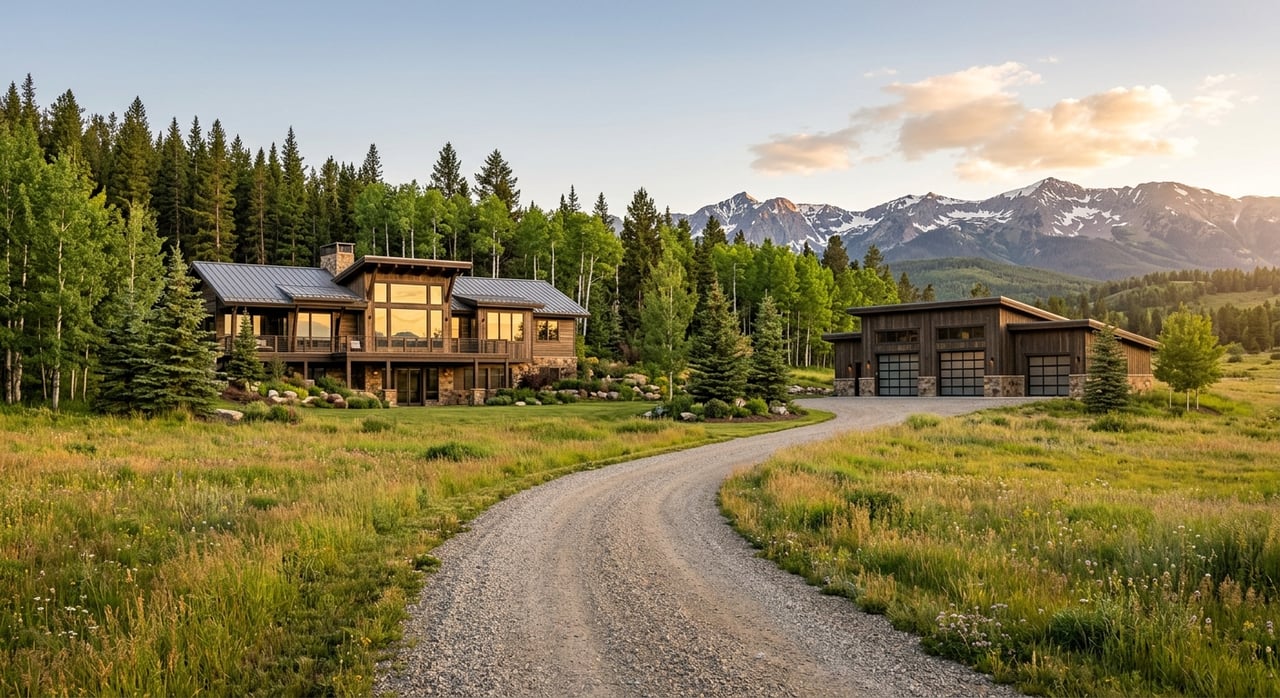
Looking for more space without feeling cut off from everything? Gallatin Gateway stands out for buyers who want land, privacy, and room to spread out while still keeping Bozeman and Big Sky within reasonable reach. If you are considering a home with elbow room and acreage here, it helps to understand how lot sizes, zoning, access, and usability can shape your options. Let’s dive in.
Gallatin Gateway sits about 12 miles southwest of Bozeman on the Gallatin River and along the corridor that leads toward Big Sky and Yellowstone. That location gives you a mix of rural breathing room and practical access to daily services, recreation, and travel routes. For many buyers, that balance is the biggest draw.
The area is not built around one uniform neighborhood pattern. The Gallatin Gateway Community Plan separates the compact Town Core from the broader rural area, where properties transition into more spacious residential parcels. In simple terms, you can find everything from smaller in-town lots to multi-acre properties with a much different feel and use profile.
If you picture all Gallatin Gateway acreage properties as the same, you may miss what makes this market interesting. Current inventory reflects a wide spectrum rather than a single lot size or property type. That means your search should start with how you want to live, not just how many acres you want.
A recent market snapshot showed 30 homes for sale with acreage in Gallatin Gateway. In that sample, properties ranged from about 1.16 acres near downtown Gallatin Gateway to parcels over 40 acres. Between those ends, buyers could see 4-acre homesites, 5-acre horse properties, 11-acre and 13-acre parcels, and larger 20-acre-plus tracts.
This variety is important because two properties with similar acreage can live very differently. One may feel connected and convenient, while another may feel more private, more rural, or more operationally complex.
Some buyers are drawn to being closer to the historic center of Gallatin Gateway. The community plan describes the existing platted town as 140 lots on 31 acres, with many lots supporting more than one use. That creates a more compact setting than what you will find on the rural edges.
Once you move beyond that core, the pattern shifts. The plan envisions rural residential properties generally in the 1- to 10-acre range at the transition edges, with much of the larger planning area remaining rural landscape. Future rural development is envisioned at a very low average density, around 1 lot per 10 acres, with substantial open space preservation.
For you, that means the feel of a property can change fast depending on location. A home near town may offer easier access and a smaller footprint to manage, while a rural parcel may offer more separation, larger views, and more land-related decision points.
One of the biggest mistakes buyers make is assuming that more acres automatically means more freedom. In Gallatin Gateway, what you can actually do with a property depends on zoning, setbacks, access, utilities, and any recorded restrictions. Acreage matters, but it is only one part of the picture.
Gallatin County zoning is especially important when you are evaluating homes with land. The A-S district is intended for agricultural and rural residential uses on larger tracts. The R-S district is designed for country estates and also allows agricultural activities on parcels of 2 acres or more.
Depending on the parcel and district, you may need to confirm whether the property can support:
In both A-S and R-S districts, accessory buildings, accessory dwellings, equestrian facilities, fences, and home occupations can be allowed as accessory uses. That said, allowed use does not mean automatic fit. Setbacks, parcel layout, and private covenants can all affect what is realistic.
Gallatin Gateway can be appealing if you want a property that supports a horse-friendly or hobby-oriented lifestyle. County code sets a minimum parcel size of 2 acres for a personal equestrian facility and 10 acres for a commercial equestrian facility. That gives some buyers a workable starting point, but it still does not replace parcel-specific review.
The zoning code also includes practical rules that matter on the ground. Barns, stables, pens, and similar livestock structures must be at least 50 feet from structures used for human occupancy. If your goal is to add equestrian improvements or maintain animals, site layout becomes just as important as total acreage.
This is where a strategic review can save time and frustration. A 5-acre parcel with good access and a usable building envelope may fit your goals better than a larger parcel with awkward setbacks, easements, or topography.
Many acreage buyers want more than open land. You may be looking for a shop, storage building, guest quarters, or space that supports how you work and live. Gallatin County code allows standalone accessory dwellings up to 2,000 square feet on parcels 1 acre or larger in the districts noted in the research.
Accessory buildings may also be placed in the front-yard area in A-S and R-S districts, though they still cannot encroach into required front or side setbacks. That detail can make a difference on irregular parcels or lots with limited buildable area. It is another reason to evaluate the actual geometry of the site, not just the marketing description.
In acreage purchases, access often matters as much as the house itself. Gallatin County subdivision regulations emphasize proper physical and legal road access, road easements, and road improvements. The community plan also notes that some eastern rural parcels face significant access constraints and that emergency-service access is a concern.
If you are comparing properties, ask practical questions early. Is the road access straightforward and recorded? Are there easements you need to understand? Does the driveway placement work with the homesite, winter conditions, and future outbuilding plans?
These details can affect convenience, development potential, and long-term value. They also shape how a property feels day to day.
With rural property, usable land and total land are not always the same thing. The community plan states that large-lot rural neighborhoods in Gallatin Gateway generally use wells and septic systems. That means utility planning may look very different from what you would expect in a more urban setting.
You will also want to pay attention to watercourse setbacks and natural constraints. County subdivision regulations require a 300-foot setback from the Gallatin River and a 150-foot setback from other watercourses. Depending on the parcel, those setbacks can reduce where future structures or improvements may go.
The community plan also notes that the entire planning jurisdiction sits in the Wildland-Urban Interface. For buyers, that means wildfire mitigation is part of the development conversation. It is not necessarily a deal breaker, but it is part of responsible property planning.
A Gallatin Gateway acreage property can offer privacy, open space, and a stronger connection to the land. It can also come with more management and more real-world considerations than a lower-maintenance in-town home. The best fit depends on what you want your daily life to look like.
The community plan notes that rural Gateway remains a working landscape with agricultural activity, home-based businesses, and uses that can bring dust, odors, flies, burning, and machinery noise. For some buyers, that is part of the appeal and authenticity of the area. For others, it may feel less predictable than a more conventional neighborhood setting.
Highway proximity is another tradeoff. Gallatin Gateway offers strong corridor access to Bozeman and Big Sky, but some parcels near Highway 191 may feel more exposed to traffic than homes deeper in the rural area. If privacy and quiet are top priorities, that difference is worth weighing in person.
When you tour homes with acreage in Gallatin Gateway, try to look beyond the listing headline. “Five acres” or “horse property” only tells part of the story. What matters more is how the parcel supports your goals now and over time.
A smart review usually includes:
This kind of property search benefits from local guidance because the details can materially affect usability and value. In a market like Gallatin Gateway, the right acreage property is usually the one where land, location, and logistics all line up.
If you are weighing Gallatin Gateway against other Gallatin Valley options, it helps to compare not just price and square footage, but also maintenance expectations, access, and how much flexibility you truly need. For many buyers, this area is a strong fit when privacy, usable land, and corridor convenience matter more than suburban simplicity.
If you want help sorting through Gallatin Gateway acreage opportunities with a practical, property-specific lens, connect with Cheryl Ridgely. She can help you evaluate lifestyle fit, land usability, and the details that matter before you move forward.
Cheryl leads with passion and professionalism and specializes in second homes, vacation rentals, investment, commercial, and development properties. If you’re looking for local market knowledge and insight, connect with Cheryl as a trusted resource.
CHERYL RIDGELY
1805 W Dickerson St Bozeman, MT 59715